
100% foreign ownership
Allowed in manufacturing and selected services sub-sectors.
Investor guide
The case for setting up in Malaysia, from economic fundamentals and location to supply chains, incentives and talent.
Steady growth, low inflation and low unemployment, with rising income and reserves.
| 2019 | 2020 | 2021 | 2022 | 2023 | 2024 | 2025 | |
|---|---|---|---|---|---|---|---|
| Real GDP growth (%) | 4.3 | -5.6 | 5.7 | 8.7 | 3.7 | 5.1 | 5.2 |
| Inflation (%) | 1.2 | 1.9 | 2.5 | 3.3 | 2.5 | 1.8 | 1.4 |
| GDP (USD bil.) | 311.1 | 333.0 | 367.4 | 339.4 | 333.2 | 431.1 | 472.0 |
| Per capita income (USD) | 10,809 | 10,553 | 11,399 | 11,950 | 9,886 | 12,289 | 13,900 |
| Unemployment (%) | 3.4 | 4.5 | 4.6 | 3.6 | 3.4 | 3.2 | 3.0 |
| International reserves (USD bil.) | 104.3 | 107.6 | 116.9 | 114.6 | 113.5 | 116.2 | 124.0 |
Source: Bank Negara Malaysia (BNM).
Allowed in manufacturing and selected services sub-sectors.
Freedom to repatriate capital, interest, dividends and profits.
Companies can employ expatriates in key posts and term posts.
Member of WIPO, signatory to the Paris and Berne Conventions and TRIPS, with Investment Guarantee Agreements with more than 60 countries.
New Industrial Master Plan 2030, Malaysia Digital Economy Blueprint, National Energy Policy 2022–2040 and the National Energy Transition Roadmap.
Incentives can cover 15 to 30 years, from initial investment to reinvestment.
Initial investment
0% to 10% for up to 15 years.
Up to 100% for 15 years.
Tailored incentive packages for qualifying projects.
Reinvestment
60% of qualifying capital expenditure for 15 consecutive years.
Incentives are subject to eligibility and approval by MIDA and the Inland Revenue Board (LHDN).
The full value chain is here
Number of companies in each supporting industry.
Source: MIDA.
Ranked first in Southeast Asia in the World Economic Forum's Energy Transition Index.
Renewable energy share of generation: targets
5G Advanced (5.5G) has been enabled on the national 5G network, bringing ultra-low latency to manufacturing, logistics and other sectors.
Graduates by field, 2025
A multiracial, multilingual workforce, with leading local universities and international branch campuses from the UK, Australia and China.
More than 1,000 Malaysian students study technical and engineering subjects at universities and Fachhochschulen across Germany, from Hamburg to Munich. Most follow the dual system, with at least six months of industry internship at German companies.
According to MIDA, the return on investment for businesses operating in Malaysia is among the highest in emerging economies.
Investor guide · Manufacturing setup
From company registration to your first production run, these are the approvals a manufacturer needs and the order they usually come in.
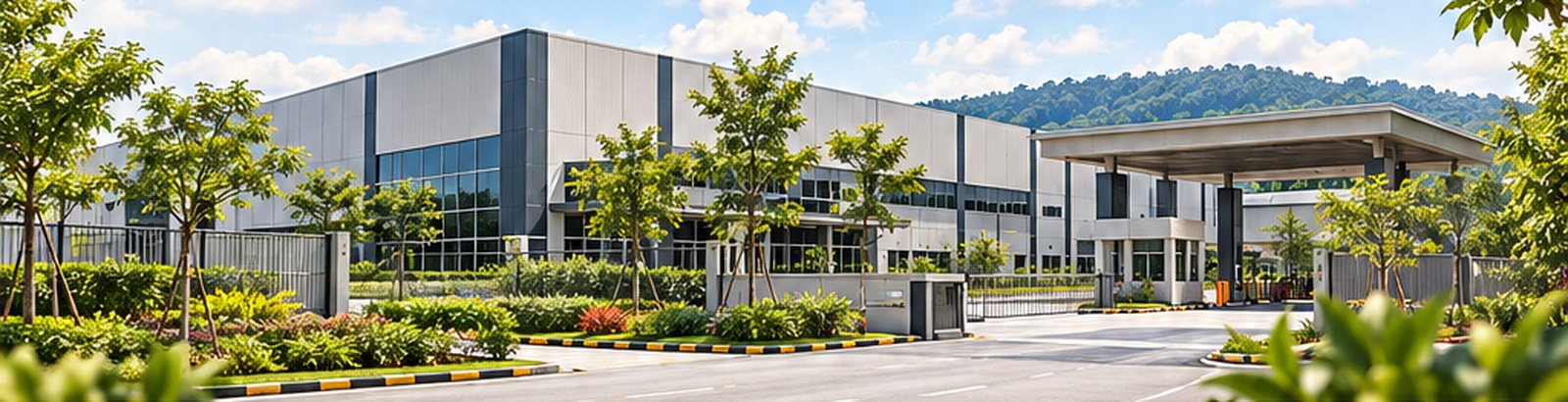
Most manufacturers set up a private limited company (Sdn Bhd) with the Companies Commission (SSM) through the MyCoID portal. You need at least one director who lives in Malaysia, a licensed company secretary based in Malaysia, a registered office and an approved auditor. Foreign investors can own 100% of a manufacturing company.
Under the Industrial Co-ordination Act 1975, a manufacturer with shareholders' funds of RM2.5 million or more, or 75 or more full-time staff, needs a licence. You apply through MIDA. Projects are assessed on capital investment per employee of at least RM140,000, a workforce at least 80% Malaysian, and managerial, technical and supervisory staff of at least 25% or value added of at least 40%.
Since 1 March 2026, new manufacturing applications fall under the New Incentive Framework. You choose either a Special Tax Rate of 0% to 10% for up to 15 years, or an Investment Tax Allowance of up to 100% of qualifying capital spending set against 70% to 100% of statutory income. Benefits are tiered by MIDA's scorecard and reviewed every year. Pioneer Status is no longer open to new manufacturing applications; existing approvals continue.
Malaysia has over 500 industrial parks. Export-focused plants can locate in a Free Industrial Zone, or run as a Licensed Manufacturing Warehouse elsewhere, to import raw materials, components and machinery duty-free. An LMW is normally for companies exporting at least 80% of output with mainly imported inputs.
The Department of Environment assesses whether a site suits your process, and prescribed activities need an Environmental Impact Assessment. Fire safety, factory machinery and local council approvals follow before you can operate.
Manufacturers can apply through MIDA for expatriate key posts and term posts. Foreign workers are subject to current government policy. Employees are registered with EPF, SOCSO and HRD Corp, and MyCoID can link these registrations when you incorporate.
Summarised in our own words from MIDA's guide to investing in Malaysia's manufacturing sector (January 2024 edition), updated for the New Incentive Framework in force since 1 March 2026. Rules and thresholds change, so confirm current terms with MIDA before you commit. Centeline Group is not affiliated with MIDA. General information only, not tax or legal advice.
MIDA official website ↗Exporting from Malaysia
A Certificate of Origin proves where your goods were made. Your overseas buyer uses it to clear customs and, under a free trade agreement, to pay lower or zero import duty. It is not a one-time licence: your company registers once with MITI, then applies for a certificate for each shipment.
For buyers in countries that have a free trade agreement with Malaysia, so they pay reduced or zero import duty. Each agreement has its own form, such as ATIGA Form D for ASEAN, Form E for China and Form RCEP.
Issued by MITI, online through the ePCO system
Proves Malaysian origin for general trade or when a letter of credit requires it. It gives no duty reduction.
Issued by MITI or a MITI-authorised chamber of commerce. For goods to the United States, only MITI has issued it since 6 May 2025.
Plan it with your factory. A valid manufacturing licence and production that adds real value in Malaysia are what let your goods qualify, so the choice of site, layout and process matters before you export.
Talk to us about an export-ready factoryBased on MITI's published guidance on preferential and non-preferential certificates of origin, as at October 2026. Requirements change; check with MITI before applying.
MITI: Certificate of Origin ↗We help you find the right site and coordinate with the relevant authorities, from first enquiry to handover.
Figures are from Bank Negara Malaysia (BNM) and the Malaysian Investment Development Authority (MIDA), compiled by Centeline Group for general information. Centeline Group is not affiliated with MIDA or any government agency. Incentives are subject to eligibility, approval and change; please seek professional tax advice.